
A note from the director. . .
There is something truly special about watching young children discover the natural world. At Neighborhood, we believe that nature is one of our greatest teachers, offering endless opportunities for curiosity, creativity, problem-solving, and wonder. When children connect with nature at a young age, they begin to develop a sense of belonging to something bigger than themselves. They learn to observe, ask questions, care for living things, and appreciate the beauty in the world around them.
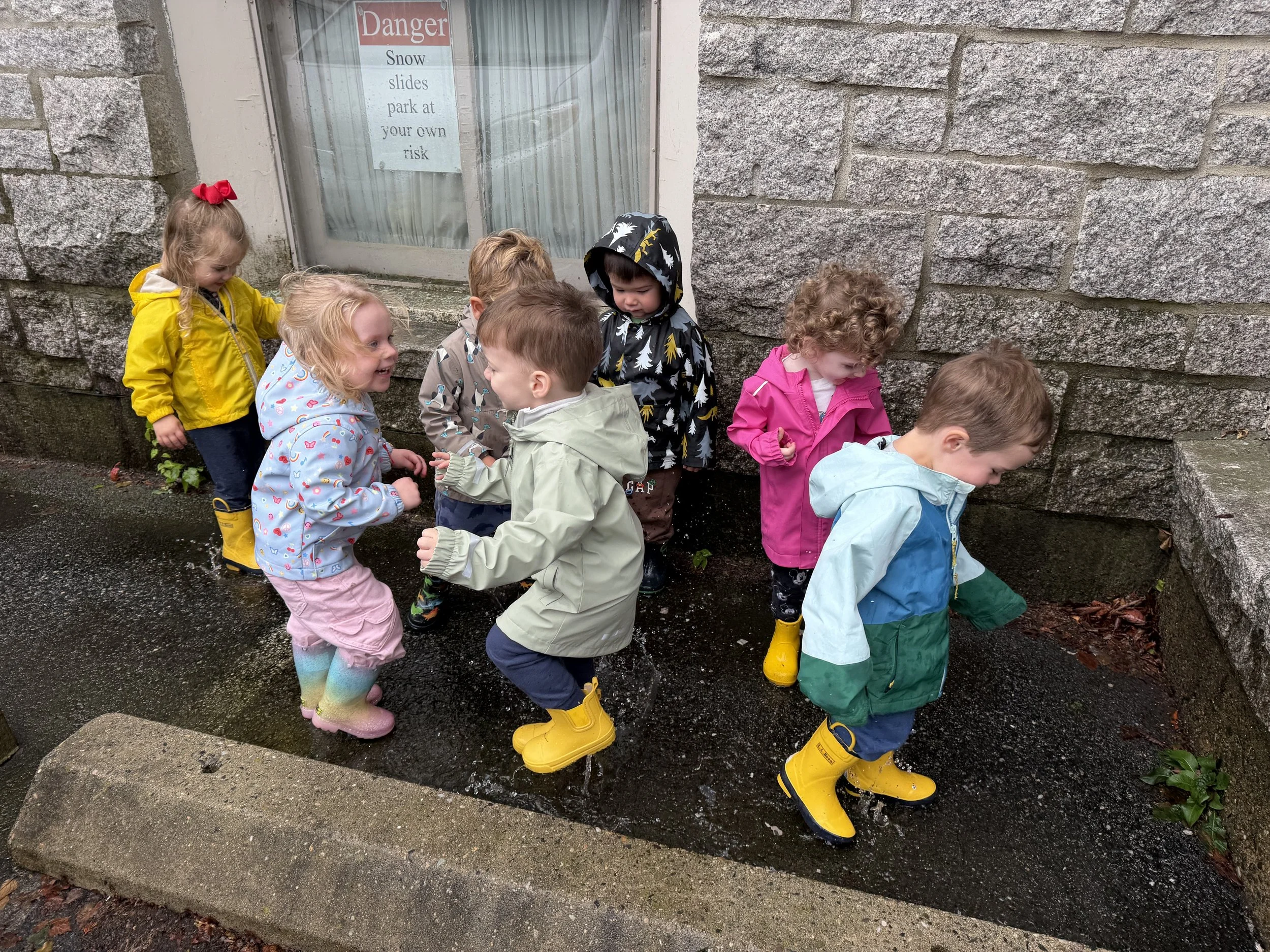
This week, our classrooms were full of these meaningful moments! Children explored soil and experimented with mud, discovering its many textures and possibilities. Our young scientists got up close and personal with mealworms, observing these tiny creatures and asking questions about the world they inhabit. Children collected leaves, noticing their colors, shapes, and differences, and met their very own special “class tree”, a familiar friend they can return to throughout the seasons to observe changes and build a deeper connection to the natural world. And, of course, there was the simple joy of jumping in puddles, splashing, laughing, and discovering that sometimes the best learning comes with a little mud on our boots!
These experiences may look like simple play, but they are laying the foundation for a lifetime of learning. A handful of dirt becomes an experiment. A tiny worm sparks scientific inquiry. A tree becomes a place of connection, comfort, and discovery. A puddle becomes an invitation to explore movement, sound, and cause and effect. When we give children the time and freedom to explore, we nurture their natural curiosity and help them grow into thoughtful, compassionate stewards of the world around them.
As we move through the fall season, I encourage you to embrace these opportunities at home, too. Take a walk and collect leaves, dig in the garden, watch a worm after the rain, jump in a few puddles, or spend quiet moments noticing the changes in a favorite tree. You don't need a special plan or activity, sometimes the most meaningful learning happens when we simply slow down and let children lead the way.
Here’s to getting our hands dirty, jumping in puddles, asking big questions, and finding wonder in the little things. These are the moments that make childhood magical and help our children build a lifelong relationship with nature.
Best,
Heather