Sometimes, a piece of children’s artwork can be easy to overlook.
A page filled with lines, circles, swirls, and what might appear to be “scribbles” to an adult who doesn’t know the story behind it. But when we slow down, listen, and ask a child to tell us about their work, we often discover that there is so much more there.
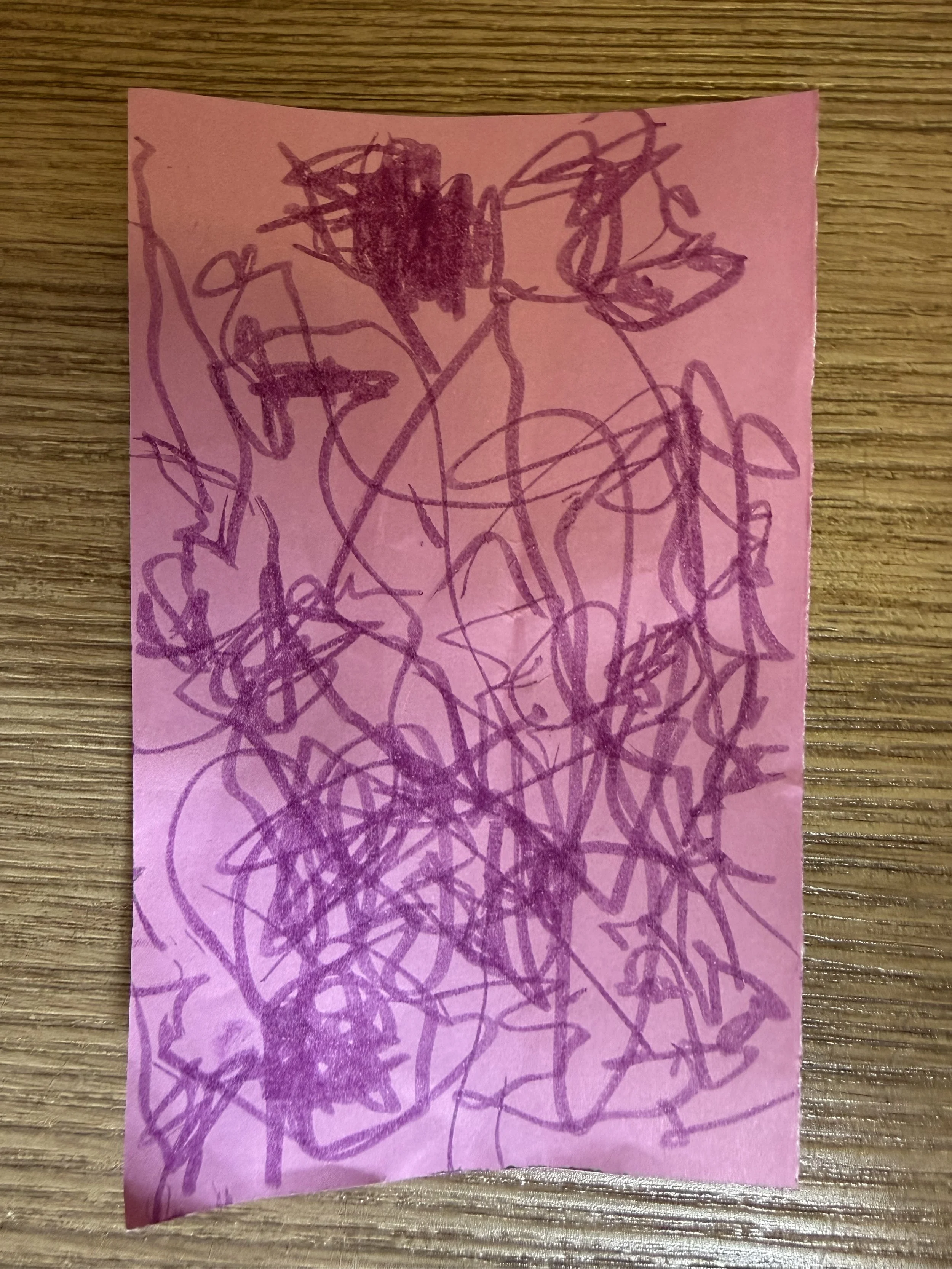
Recently, one of our 2 Day Preschool children created a drawing about her dad going to work. She worked with such intention and focus, carefully making marks and creating details that were meaningful to her. When she told her teacher about the drawing, she shared the story behind what she had created, including the important detail that her dad has a beard!
To someone passing by, the paper might simply look like a collection of scribbles. But to this child, it was a story. It was a representation of someone she loves. It was her way of making sense of her world and communicating an experience that mattered to her.
This is mark making.
Mark making is so much more than practicing how to hold a pencil or learning to write letters. It is one of the earliest ways children learn to communicate their ideas, represent their experiences, express their feelings, and give meaning to the world around them.
At Neighborhood, we try to resist the urge to look at children's work only through an adult lens. Instead, we listen. We ask questions. We invite children to tell us about their thinking. We notice the details and the intention behind their work.
The marks themselves are important, but the thinking behind the marks is where the learning lives.
When a teacher takes the time to sit beside a child and say, “Tell me about your picture,” we are telling that child that their ideas matter. Their stories matter. Their way of seeing the world matters.
And sometimes, what looks like a scribble to us is actually a child saying, “This is my dad. He is going to work. He has a beard. I love him. This is something important to me.”
That is worth slowing down for.
That is worth listening to.
That is worth documenting.
And that is the beautiful beginning of literacy.
Best,
Heather